Dr. Varja Balžalorsky Antić
My study of Matija Murko’s work concerns his relationship with the French academia. I am mostly interested in Murko’s intense contacts, cooperation and mutual enrichment with Western Slavic philology, especially French Slavic philologists and comparative linguists such as A. Meillet, E. Denis, L. Leger, P. Boyer, and A. Mazon. It was precisely the support of the French Slavists in Prague that enabled Murko to establish a leading centre of Slavistic studies in Central Europe. As its president, he did not rely on Austrian examples for his vision of the centre’s future, but on the newly-formed institutions in France, such as Institut d’etudes slaves, established in 1919 by Ernest Denis. In my study of archives and correspondence, I am especially interested in his contacts with A. Mazon and A. Meillet. The first one concerns methodological and organizational approaches, while the second involves content and touches on the connection and potential mutual influence of Matija Murko and Antoine Meillet during the research of oral poetry.
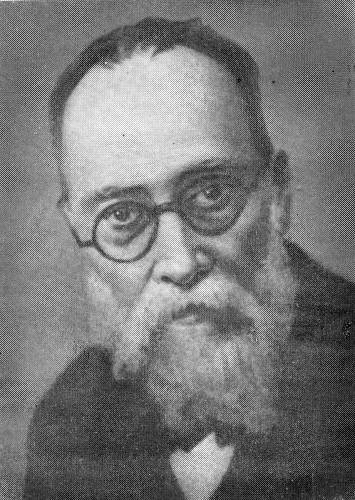
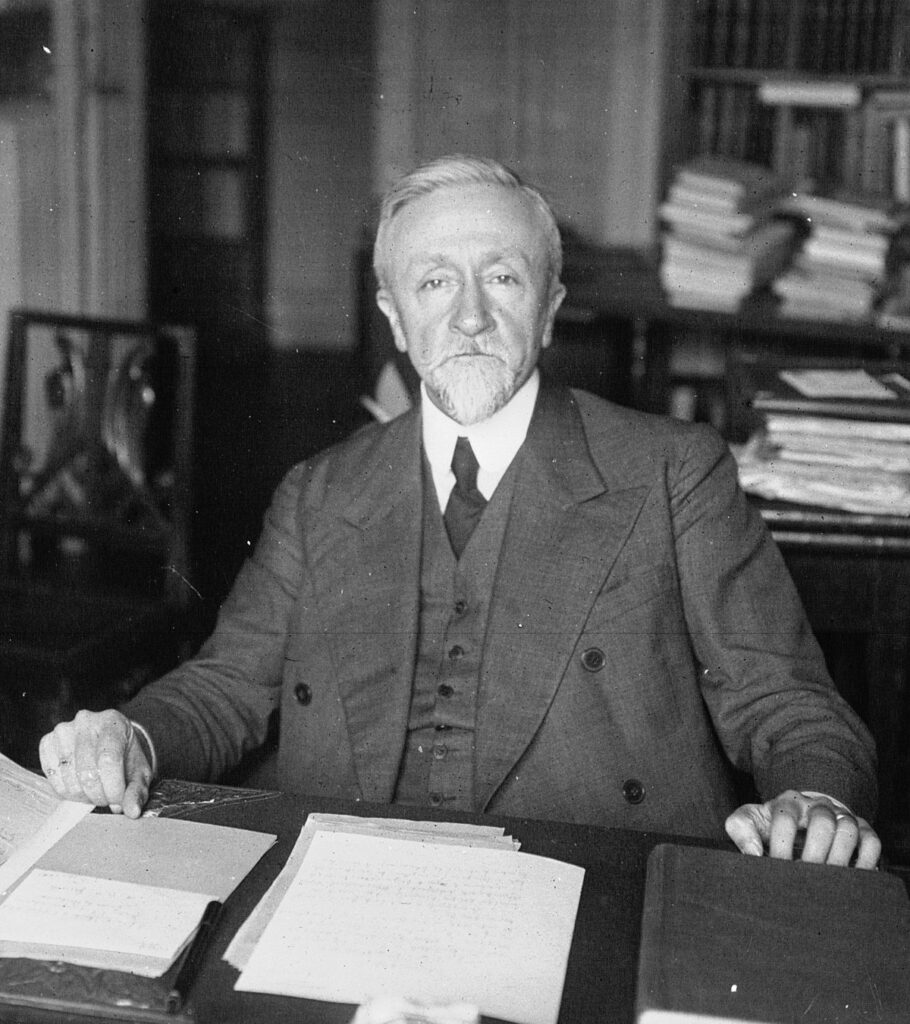
André Mazon was the vice president and later president (1937-1959) of the Institute of Slavic Studies. When Murko sought to popularize the approaches of French Slavistics, he often turned to his western colleague for help, and the latter informed the Czech public about the activities of the French institution. The sizable correspondence between the two scientists testifies to the intense contacts and exchange of opinions; the Prague archive of the Slavic Institute keeps no less than 59 letters of A. Mazon to M. Murko. To describe their vision of the character of international and national Slavistics, their championship of the apolitical nature or political neutrality of the organization must be stated. This principle was also adopted by Murko when he took the helm of the Prague Slavic Institute in 1932. Methodologically Murko and Mazon also agreed on the wider conception of Slavic philology, a position which Murko also took in the Proposal of Statute of Slavic Philologists in 1919 (Pospišil and Zelenka 2020: 69). In this document, he did not conceive of Slavic philology in the narrow sense, limited by the principles of the Prague linguistic circle with its structuralist direction, but rather as an intersection of literary history, folklore studies, linguistics, and cultural history. Based on a thorough examination and study of archives, especially in Prague and the Institute of Slavic Studies in Paris, my research will provide a more accurate insight into the prolific correspondence between the two Slavists and attempt to outline the methodological premises which they sketched out for the development of Slavistics.
The second branch of my research will deal with the study of Matija Murko’s contacts with Antoine Meillet, one of the most influential comparative linguists of his time, as well as the teacher of key figures of the French contemporary linguistics, E. Benveniste, G. Dumezil, and A. Martinet. It is less known that Meillet also had an important role in the development of oral poetry research. It is interesting that he was linked to many researchers of oral poetry just when the theory of orality was coming into being; in addition to Matija Murko, also Jean Poulhan, Marcel Granet, Marcel Jousse, Pëtr Bogatyrev, and, of course, Milman Parry. Three of those – Paulhan, Jousse and Parry – were also his students in various periods. In 1923, Meillet published his book Les origines indo-européennes des mètres grecs, in which he put forward the oral-formulaic hypothesis. M. Parry certainly relied on it when he was writing his dissertation under Meillet’s mentorship. Based on the examination of the correspondence, Blaž Zabel (Zabel 2020) portrays Parry’s relationship with Murko in detail in his article. In my research, I intend to illuminate the link between Parry and Murko, that is, A. Meillet, his work, and the events in the field of orality research, connected in various ways with A. Meillet as an author, mentor and reviewer of milestone contributions in the field of the theory of orality. I will be especially focused on the nature of the contacts between Murko and Meillet. Five years after the publication of his study on Greek metrics in 1928, Meillet, as the president of the Institute of Slavic Studies, invited Murko to Sorbonne in Paris to give lectures on the South Slavic heroic epic poetry. As is known, Murko in his lectures, which were then published as the prominent monography La poésie populaire épique en Yougoslavie au début du XXe siècle, often compared Greek rhapsodes to South Slavic guslars. With his findings, he also made a name for himself in the field of Homeric scholarship (Gantar 107). What is the relationship and connection between the works Les origines indo-européennes des mètres grecs and La poésie populaire épique en Yougoslavie au début du XXe siècle and their authors? Was there a mutual influence? Was Meillet – like Parry a few years later – already familiar with Murko’s first studies on the South Slavic oral tradition, presented in the 1919 article »Neues über südslavische Volksepik«? And how did Meillet influence Murko’s work?
References
Bader, Françoise. 1988. »Meillet et la poésie indo-européenne« Cahiers Ferdinand de Saussure 42: 97–125.
Gantar, Kajetan, 2020. »Odmevi Murkovih raziskav v homeroslovju« M. Jesenšek (ur.) Matija Murko – slovanski filolog v najširšem pomenu besede. Ljubljana: SAZU. 101– 112.
Jousse, Marcel, 1925. Études de psychologie linguistique. Le style oral rythmique et mnémotechnique chez les Verbo-moteurs. Pariz: Beauchesne.
Lamberterie, Charles de, 1997. »Milman Parry et Antoine Meillet« Françoise Létoublon (ur.) Hommage à Milman Parry. Le style formulaire de l’épopée homérique et la théorie de l’oralité, Amsterdam : Gieben. 1–22.
Meillet, Antoine. 1923. Les origines indo-européennes des mètres grecs. Pariz: Presses universitaires de France.
Meillet, Antoine. 1925. »Marcel Jousse. Études de psychologie linguistique« Bulletin de la société de linguistique 26: 5.
Meillet, Antoine. 1928. »Milman Parry. L’épithète traditionnelle dans Homère et Les formules et la métrique d’Homère« Bulletin de la société de linguistique 29(2): 100–102.
Murko, Matija, 1919. »Neues über südslavische Volksepik« Neue Jahrbüchner für das klasiches Altertum Geschichte und Deutsche Literatur 22, 273-296.
Murko, Matija, 1929. La poésie populaire épique en Yougoslavie au début du xxe siècle. Pariz: Champion.
Pospišil, Ivo, Zelenka, Miloš, 2020. »Češko-slovenski projekti s področja zgodovine slavistike in teorije literature (Matija Murko kot povezovalna osebnost češko-slovenske in evropske literarne vede v medvojnem obdobju)« M. Jesenšek (ur.) Matija Murko – slovanski filolog v najširšem pomenu besede. Ljubljana: SAZU. 64–80.
Testenoire, Pierre-Yves , 2023. »Les recherches sur la poésie orale autour d’Antoine Meillet: Jean Paulhan, Marcel Jousse, Milman Parry« Histoire Épistémologie Langage, 44 (2) 79–100.
Zabel, Blaž, 2020. »Matija Murko, predhodnik Milmana Parryja?« M. Jesenšek (ur.) Matija Murko – slovanski filolog v najširšem pomenu besede. Ljubljana: SAZU. 113– 130.